

Repository Pattern in DDD (How It Works with Real Examples) 4/10

A Deep Analysis of Essential DDD Concepts to Create Clear and Robust Repositories
Why is the Repository Pattern Important in DDD?
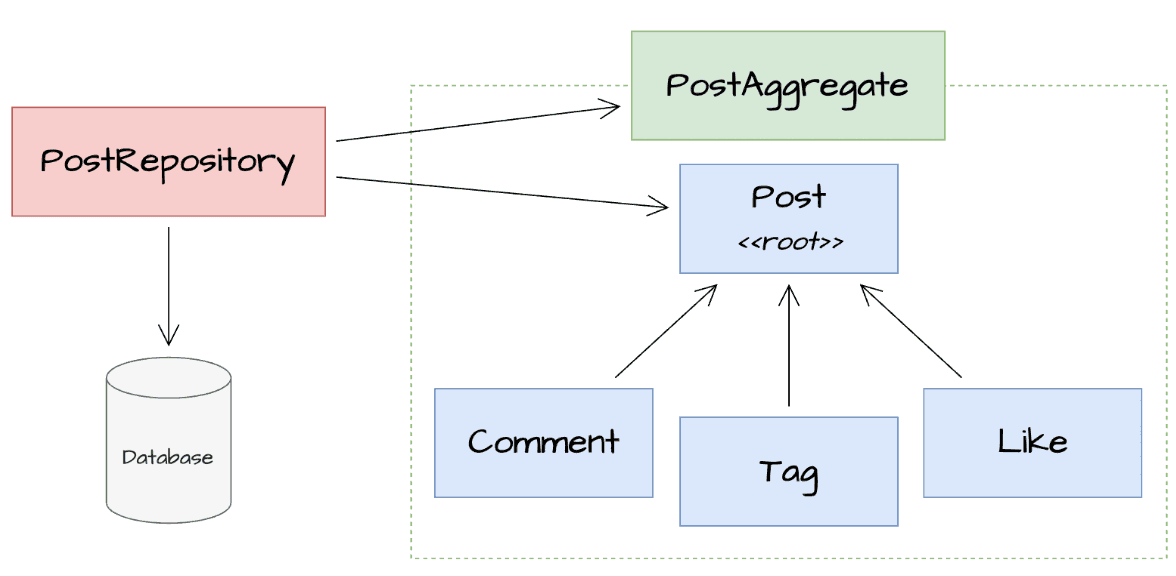
In our ongoing exploration of InstaKran, a social media application for sharing and interacting with posts, we encountered a common challenge: managing data persistence without contaminating the domain model. For example, consider the Post aggregate we discussed earlier, which includes entities like Comment and Like. Although the core business logic of the application revolves around these entities, the complexities of storage and retrieval should not interfere with the purity of the domain model.
Why Use Repositories Instead of DAOs?
InstaKran could use DAOs (Data Access Objects) to interact directly with the database, but this approach tightly couples domain logic with persistence concerns. This coupling results in less maintainable and harder-to-test code. Instead, repositories encapsulate the data access layer, creating a clear boundary that separates the domain from persistence logic.
In InstaKran:
- A PostRepository could handle the storage and retrieval of Post aggregates, ensuring that business rules for comments and likes are respected.
- A UserRepository could manage User aggregates, focusing on profiles and follower relationships.
Repositories help maintain the integrity of the domain model by abstracting the persistence layer, allowing developers to focus on business logic rather than database details.
Maintaining the Purity of the Domain Model
By using repositories, the domain model remains free from persistence-related concerns, such as SQL queries or ORM (Object-Relational Mapping) details. This separation ensures that domain logic can evolve independently of changes in underlying data sources.
What is the Repository Pattern?
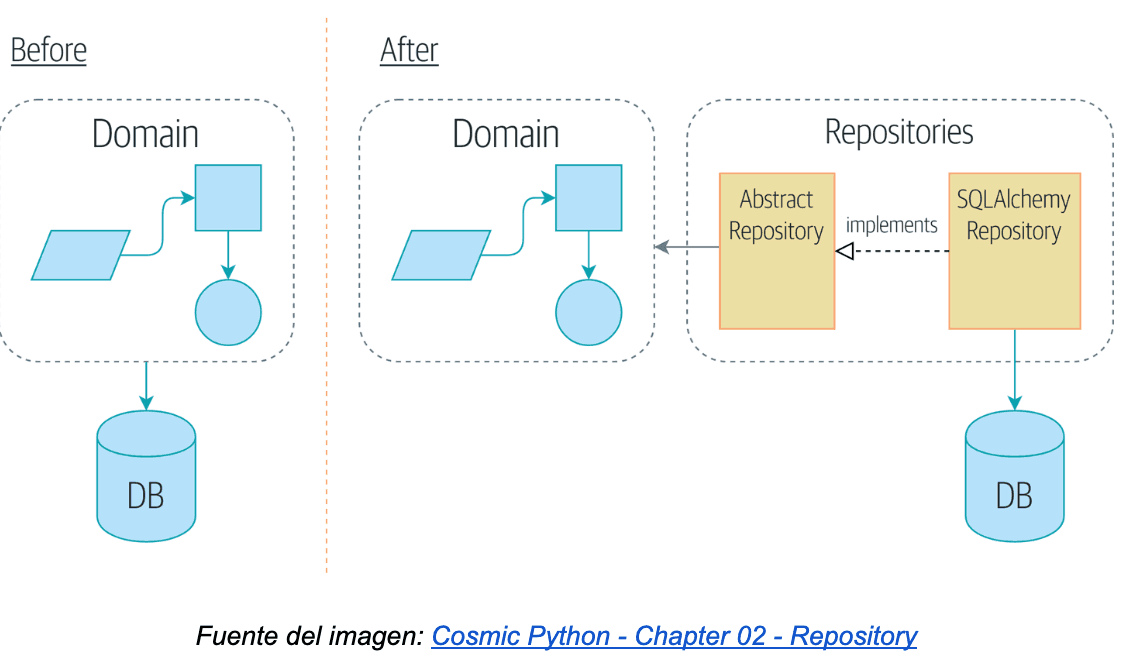
The repository pattern is a design approach that provides an abstraction layer for accessing data sources, such as databases, APIs, or file systems. It acts as a mediator between the domain model and the data layer.
A Bridge Between Domain Models and Data Sources
Repositories function as a bridge, allowing the domain model to interact with the persistence layer in a controlled and business-focused manner. For example, instead of exposing raw database operations, a PostRepository could offer domain-specific methods like findPostsByUser(UserId) or addCommentToPost(PostId, Comment).
This abstraction protects the domain model from details about how data is stored or retrieved, enabling cleaner and more maintainable code.
Key Responsibilities of Repositories in DDD
Access and Management of Aggregates
Repositories serve as the gateway to retrieve and persist complete aggregates. For example, when retrieving a Post aggregate, the repository ensures that all related entities, such as Comment and Like, are loaded as part of the aggregate.
Abstraction of Persistence Details
Repositories hide database queries, API calls, or other data access complexities, ensuring that the domain model is not burdened with these details.
Ensuring Consistency
Repositories often manage transactions, ensuring that changes to an aggregate maintain its invariants and do not leave the system in an inconsistent state.
Provision of Query Methods
Repositories support business-specific queries while adhering to domain rules. For example, a PostRepository might offer a method to get posts within a specific date range.
Best Practices for Implementing Repositories
Keep Repositories Focused on the Aggregate
Each repository should correspond to a specific aggregate root. For example, the PostRepository handles operations related to the Post aggregate and its entities but does not directly interact with User aggregates.
Simplify Repository Interfaces
Repository interfaces should focus on core operations like add, remove, update, and find. This simplicity ensures clarity and prevents repositories from becoming cluttered with unnecessary methods.
Avoid Overloading with Business Logic
Repositories should focus solely on data access and leave domain logic to the domain model or application services. For example, the PostRepository should provide methods to retrieve or store posts, but the logic to validate comments should reside in the Post aggregate.
Use the Specification Pattern for Complex Queries
When business requirements demand complex queries, consider using the specification pattern to decouple query logic from repositories. This approach keeps repositories simple and easy to maintain.
Challenges and Anti-Patterns
Repositories as Overly Complex Layers
Over-abstracting repositories can lead to unnecessary complexity, making the system harder to understand and maintain.
Leaking Persistence Details
Repositories should not expose database schema details or ORM-specific features in their interfaces. For example, returning raw SQL results or exposing entity IDs directly can break the abstraction.
Overloading with Queries
Avoid turning repositories into reporting tools by overloading them with query methods. Instead, separate reporting concerns into dedicated services or query objects.
Ignoring Aggregate Boundaries
Repositories must respect aggregate boundaries, ensuring they do not manipulate entities outside their designated aggregate. For example, a PostRepository should not directly modify User entities.
Conclusion
The repository pattern is a cornerstone of Domain-Driven Design, providing a structured approach to managing data access while preserving the purity of the domain model. By encapsulating persistence logic, repositories enable developers to focus on business rules and maintain a clear separation of concerns.
When implemented carefully, repositories improve code clarity, simplify maintenance, and align software more closely with the business domain, making them indispensable for building robust and scalable systems.
These are the next topics we will discuss in this From Good to Excellent in DDD series. I hope we navigate together through this important architecture:
- From Good to Excellent in DDD: Elevate Code Quality with Domain-Driven Design - 1 / 10
- Entities vs Value Objects in DDD (Clear Explanation with Examples) 2/10
- Aggregates and Aggregate Roots in DDD (Simple Guide with Examples) 3/10
- Repository Pattern in DDD (How It Works with Real Examples) 4/10
- Domain Services in DDD: When and How to Use Them 5/10
- From Good to Excellent in DDD: Understanding Application-Service Patterns in Domain-Driven Design - 6/10
- DDD Architecture Explained Simply (Practical Guide with Examples) 7/10
- bounded context
- From Good to Excellent in DDD: Event-Storming as the Modeling Strategy to Create Domain-Driven Design - 9/10
- From Good to Excellent in DDD: Common Mistakes and Anti-Patterns in Domain-Driven Design - 10/10
Ready to Apply the Repository Pattern in Your Projects with Domain-Driven Design?
At Kranio, we have software architecture experts who will help you implement effective design patterns like Repository in your projects, ensuring a solid and scalable structure. Contact Us and discover how we can improve the architecture of your systems.
Previous Posts

Patterns and Anti-Patterns in Unit Testing with JUnit and Mockito
Discover the main patterns and antipatterns in unit testing with JUnit and Mockito to create cleaner, more maintainable, and reliable tests.
ETL vs ELT: Differences, Use Cases, and Best Tools
ETL or ELT? Learn their differences, advantages, top modern tools, and practical use cases explained clearly and without complications.